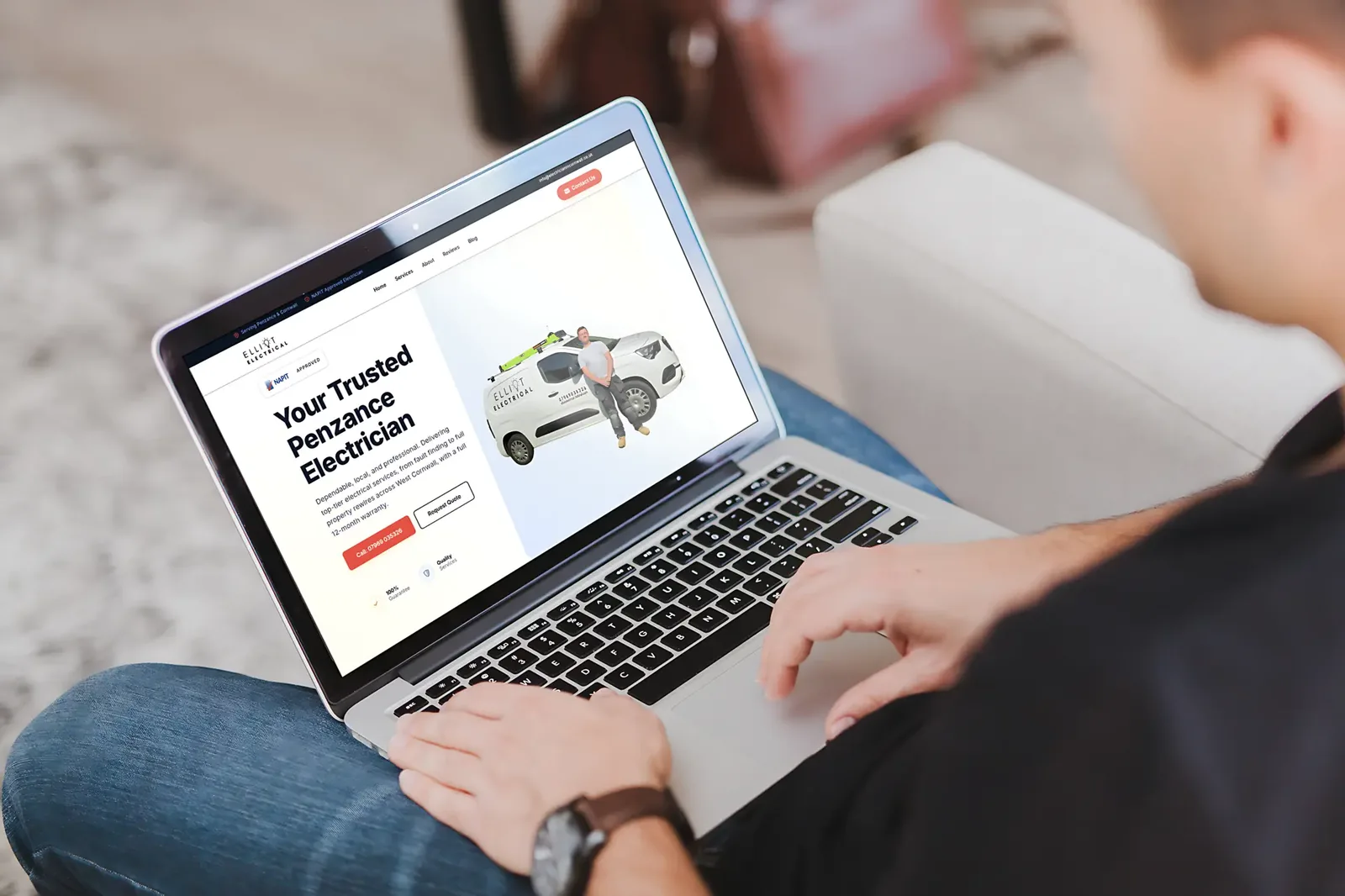
If most of your work comes through recommendations, repeat customers or your Google Business Profile, it is reasonable to ask whether you really need a website. The short answer is yes, but not because every trade business needs a huge site or an expensive marketing campaign. You need a clear place that confirms who you are, what you do, where you work and how a customer can contact you.
Your Google profile and website do different jobs
A Google Business Profile is excellent for discovery. It can show your location or service area, opening hours, reviews, photos and phone number directly in Search and Maps. But customers often want more information before inviting someone into their home or trusting them with an expensive job.
Your website gives you room to explain individual services, show completed work, display qualifications and guarantees, introduce the people behind the business and make the next step obvious. The profile gets their attention. The website helps remove doubt.
It should make a suitable local customer feel confident enough to call, message or request a quote.
Customers make quick trust decisions
When someone has lost power, found a leak or needs a roof repair, they are unlikely to study ten businesses in detail. They scan for evidence that a business covers their area, handles the right kind of work and looks dependable.
A strong website makes that evidence easy to find. It can bring together:
- Your main services and the types of jobs you accept.
- The towns, cities or service areas you genuinely cover.
- Recent customer reviews and examples of completed work.
- Qualifications, registrations, insurance and meaningful guarantees.
- A clear phone number, enquiry form or message button.
- A short introduction to you and your team.
You control the information and the enquiry route
Social platforms and business directories are useful, but you do not control how they display your business or which features they change. A website is your own permanent base. You decide which services are prioritised, which proof appears next to them and exactly how a customer gets in touch.
This also gives adverts, vehicle graphics, leaflets and social posts somewhere consistent to send people. Instead of asking a customer to search through a feed, you can direct them to the page that answers their question.
A website helps Google understand your business
A well-structured website can provide detailed information about your services and locations that would never fit naturally into a short profile description. A page about domestic rewiring in your genuine service area gives both customers and search engines clearer context than a homepage that only says “all electrical work undertaken”.
This does not guarantee a particular position in Google, and no honest web designer should promise one. It creates a stronger foundation: clear service information, useful local content, fast mobile pages and consistent business details.
It needs to work properly on a phone
Local customers are often searching while away from a desk. Your phone number should be easy to tap, forms should be short and the page should load without making someone wait through oversized images or unnecessary effects. Good mobile design is not a smaller version of the desktop site. It is a direct route from question to answer to contact.
Your website does not need to be enormous
A straightforward trade business can start with a focused site covering the essentials: a homepage, core service information, areas covered, reviews or completed work, an about section and a contact route. More pages should only be added when they answer a genuine customer question or explain a real part of the business.
Five useful pages are better than fifty repeated location pages with the town name changed. Clear, specific content builds more trust and is easier to keep accurate.
Seven questions your website should answer
- What trade and services do you provide?
- Which areas do you cover?
- Why should a customer trust you?
- What kind of work have you completed?
- What do previous customers say?
- How quickly can someone expect a response?
- What should the customer do next?
The bottom line
A website is not a substitute for doing good work, collecting genuine reviews or maintaining an accurate Google Business Profile. It supports all of those things. It gives customers one convincing place to check your business and gives every other part of your marketing somewhere useful to lead.
For a trade business, the best website is not necessarily the biggest or flashiest. It is the one that loads quickly, answers the right questions, shows credible proof and makes contacting you effortless.